

Medical emergencies often arrive without warning, bringing a wave of emotional distress and logistical chaos. In those critical moments, the last thing anyone wants to worry about is arranging finances or navigating complex paperwork to get admitted to a hospital. This is where the concept of a care health insurance network hospital becomes a game-changer for policyholders.
Understanding how these networks function is not just about knowing where to go; it is about securing peace of mind. Network hospitals represent a partnership between medical facilities and insurance providers designed to streamline healthcare access. When you utilize a care health insurance network hospital, you are essentially stepping into a pre-approved ecosystem where the focus shifts from “how will I pay?” to “how quickly can I recover?”
This guide explores the mechanics of network hospitals, the immense value of cashless treatments, and how to navigate these systems effectively. Whether you are buying your first policy or reviewing your current coverage, knowing how to leverage these networks is essential for maximizing your benefits.
For more information on the specific plans available to you, visit our [Health Insurance Service Page].
What Are Care Health Insurance Network Hospitals?
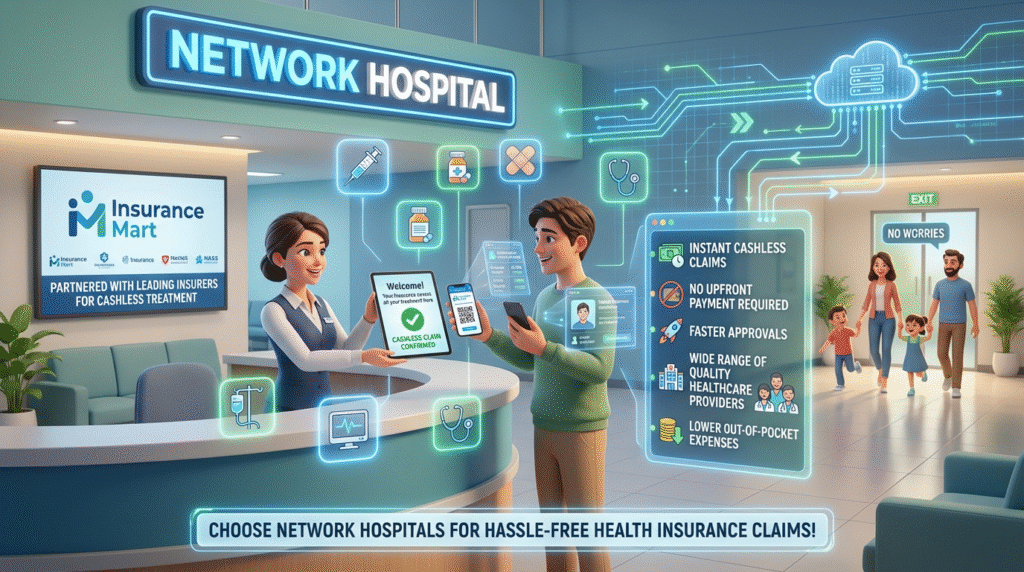
At its core, a care health insurance network hospital is a medical facility—be it a hospital, day-care center, or nursing home—that has entered into a formal agreement or Memorandum of Understanding (MoU) with an insurance company or a Third-Party Administrator (TPA).
Insurance providers rigorously vet these hospitals based on quality standards, infrastructure, medical expertise, and pricing protocols. Once a hospital joins the network, they agree to offer specific services to the insurer’s policyholders, often at pre-negotiated rates.
The primary distinction for the policyholder is the method of payment settlement. In a non-network hospital, you must settle the bills out of your own pocket and subsequently file for reimbursement. However, at a care health insurance network hospital, the insurance company settles the medical bills directly with the hospital, subject to policy terms. This arrangement forms the backbone of the “cashless” facility that makes modern health insurance so user-friendly.
To dive deeper into the basics of how these policies function, read our article on [Understanding Health Insurance].
Cashless Health Insurance Network Hospitals: How They Work
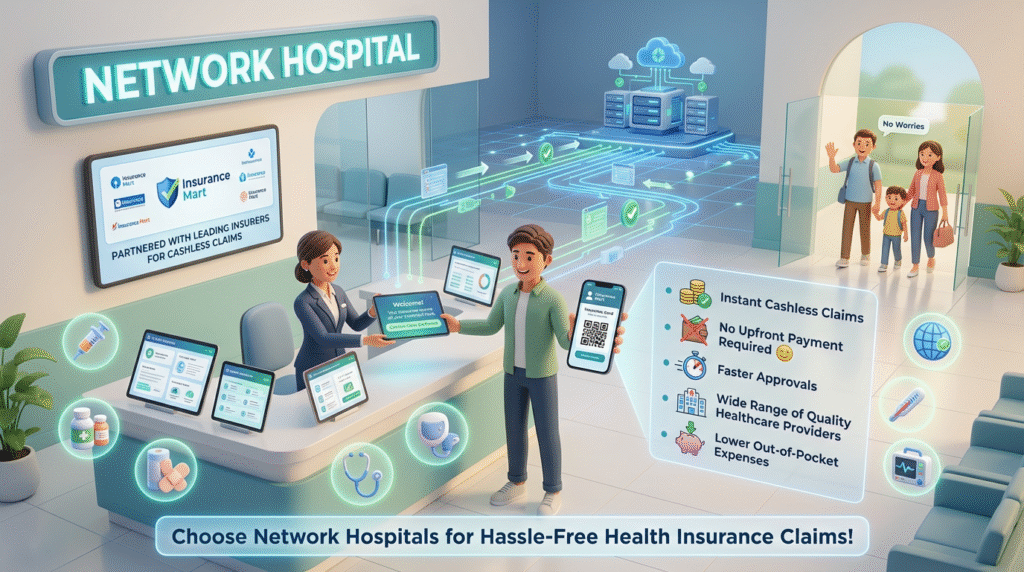
The most significant advantage of holding a health policy is access to cashless health insurance network hospitals. This feature allows insured individuals to undergo treatment without paying the hospital bills upfront, provided the treatment is covered under their policy.
The Cashless Process Explained
Understanding the workflow can save you significant time during admission. Here is how it typically works:
- Identification: Upon arriving at the network hospital, you must visit the TPA or insurance helpdesk. You will need to show your health card (issued by the insurer) and a valid photo ID.
- Pre-Authorization: For planned surgeries, this step should ideally be done 2-3 days in advance. For emergencies, it is done within 24 hours of admission. The hospital fills out a pre-authorization form detailing the diagnosis and estimated cost, which is sent to the insurer.
- Approval: The insurance company reviews the request. If everything falls within the policy coverage, they issue an authorization letter to the hospital.
- Treatment: You receive the necessary medical care. The hospital keeps the insurer updated if the cost or duration of stay is likely to exceed the initial estimate.
- Discharge: Once treatment is complete, you sign the final bill to verify the services received. The hospital sends this bill to the insurer for settlement.
It is important to note that “cashless” does not always mean “zero cost.” You may still need to pay for non-medical items (like registration fees, toiletries, or certain consumables) or co-payments if your policy dictates them. However, cashless health insurance network hospitals remove the burden of arranging large sums of liquidity instantly.
For a detailed look at the documentation required, check out our [Health Insurance Claim Page].
How to Find a Health Insurance Network Hospital List
Knowing which hospitals are in your network before an emergency strikes is a vital part of financial planning. Insurance companies update their partnerships regularly, so having access to the current health insurance network hospital list is crucial.
Methods to Access the List
- Official Website: Most insurers have a “Network Hospital” locator tool on their website. You can filter by state, city, and even medical specialty to find a care health insurance network hospital near you.
- Mobile Apps: Modern insurers provide dedicated apps where you can use GPS to find the nearest network facility instantly.
- Policy Document: When you receive your policy kit, it often includes a physical list or a link to the digital directory.
- Customer Support: A quick call to your insurer’s toll-free number can help verify if a specific hospital is currently in their network.
Always verify the health insurance network hospital list before a planned procedure. Hospitals may occasionally be delisted due to administrative reasons or lapsed agreements, and you do not want to be caught off guard.
You can browse our [Partnered Hospitals List] to see available facilities in your area.
Network Hospitals for Health Insurance Claims: The Key to Smooth Claims Processing
When you choose network hospitals for health insurance claims, you are opting for a standardized, professional, and expedited claims experience.
The administrative burden of a reimbursement claim (where you pay first and claim later) can be heavy. You have to collect discharge summaries, pharmacy bills, diagnostic reports, and doctor’s notes, ensuring every signature and stamp is in place. If a single document is missing, the claim can be put on hold.
In contrast, network hospitals for health insurance claims handle the majority of this coordination internally. Because the hospital wants to get paid by the insurer, their dedicated TPA desk ensures:
- Documents are formatted correctly according to the insurer’s requirements.
- Queries raised by the insurance company are answered promptly by medical professionals.
- The turnaround time for approval is significantly faster.
This collaboration reduces the likelihood of claim rejection due to technicalities or missing paperwork. It allows the family of the patient to focus on caregiving rather than courier services and file management.
Learn more about how we handle these procedures on our [Claims Process Page].
Benefits of Choosing Network Hospitals for Health Insurance
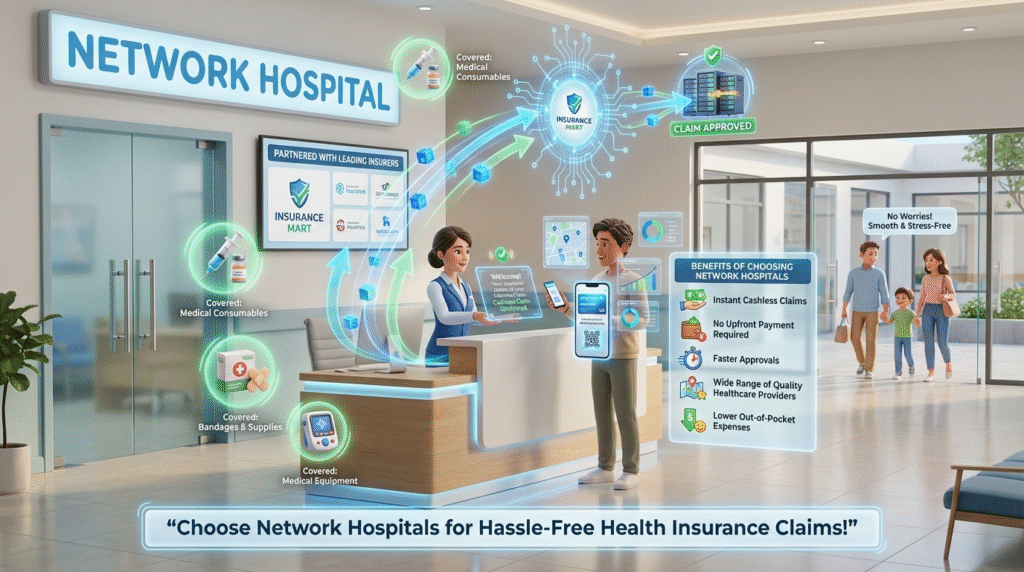
While the ability to get treated without immediate payment is the headline feature, the benefits of choosing network hospitals for health insurance extend far beyond just the financial aspect.
1. Financial Relief and Liquidity
Medical inflation has caused treatment costs to skyrocket. A simple surgery can cost lakhs of rupees. By utilizing a network hospital, you protect your savings and avoid the need to liquidate assets or take out emergency loans.
2. Quality Assurance
Insurers do not partner with just any clinic. To become a care health insurance network hospital, a facility usually needs to meet specific criteria regarding hygiene, medical infrastructure, doctor qualifications, and safety protocols. This acts as a secondary layer of quality assurance for you.
3. Negotiated Rates
Insurers have significant bargaining power. They negotiate package rates for common procedures with network hospitals. This means the overall cost of treatment at a network hospital is often lower than the market rate, which helps conserve your “Sum Insured” for future needs.
4. Simplified Documentation
As mentioned earlier, the hospital takes ownership of sending bills and reports to the insurer. This drastically reduces the paperwork burden on the policyholder.
5. Priority Admission
Many network hospitals have dedicated desks for insurance patients, which can sometimes speed up the admission process compared to general admissions.
Considering the benefits of choosing network hospitals for health insurance, it becomes clear why checking the network status of your preferred local hospital is a smart move before buying a policy.
For a broad view of plans that offer extensive networks, visit our [Health Insurance Overview Page].
Reimbursement vs. Cashless: What If You Cannot Reach a Network Hospital?
Life is unpredictable, and sometimes you may find yourself in a location where a care health insurance network hospital is not accessible, or you might prefer a specific doctor who operates at a non-network facility. In such cases, your health insurance coverage is still valid, but the mode of settlement changes to reimbursement.
The Reimbursement Route
If you are treated at a non-network hospital, you must pay all bills immediately. Upon discharge, you collect all original documents, invoices, and reports. You then submit a claim form along with these documents to your insurer. The insurer will verify the expenses and reimburse you, usually within 15 to 30 days.
While reimbursement ensures you are covered, it lacks the convenience of the cashless facility. It requires you to have emergency funds available and places the onus of documentation squarely on your shoulders. Therefore, whenever possible, opting for a facility from the health insurance network hospital list is the superior choice for reducing stress.
Tips for a Smooth Experience at Network Hospitals
To ensure your experience at a care health insurance network hospital is glitch-free, keep these tips in mind:
- Carry Your E-Card: Always have a digital or physical copy of your health insurance card. It contains your policy number and member ID, which are essential for the TPA desk to locate your details in the system.
- Know Your Room Rent Limits: Many policies have a cap on room rent (e.g., 1% of Sum Insured). If you choose a luxury room at a network hospital that exceeds your eligibility, the insurer will only pay the eligible amount, and you will have to pay the difference—plus potentially higher proportionate charges for doctor fees.
- Declare Pre-Existing Diseases: Ensure your treating doctor is aware of your medical history and that it matches what you declared in your policy proposal. Discrepancies here are a common cause of pre-authorization denial.
- Keep Someone Informed: If you are the primary policyholder and you are the one being hospitalized, ensure a family member knows where the insurance documents are kept.
Conclusion
Health insurance is not just a financial product; it is a service designed to support you during vulnerable moments. A care health insurance network hospital serves as the delivery mechanism for that support, bridging the gap between medical necessity and financial capability.
By understanding how cashless health insurance network hospitals operate and knowing how to access your health insurance network hospital list, you empower yourself to make quick, informed decisions during emergencies. The benefits of choosing network hospitals for health insurance—from standardized care to financial ease—make them an indispensable component of modern healthcare planning.
Before your next renewal or purchase, take a moment to review the network reach of your insurer. Ensure that the top hospitals in your vicinity are covered, so when the time comes, you can focus on what truly matters: getting better.
Want to find the best health insurance plans with a wide range of network hospitals? Visit [Insurance Mart] to get started today!
For further reading on regulations and standards regarding network hospitals, you can refer to the guidelines provided by the [Insurance Regulatory and Development Authority of India (IRDAI)].

